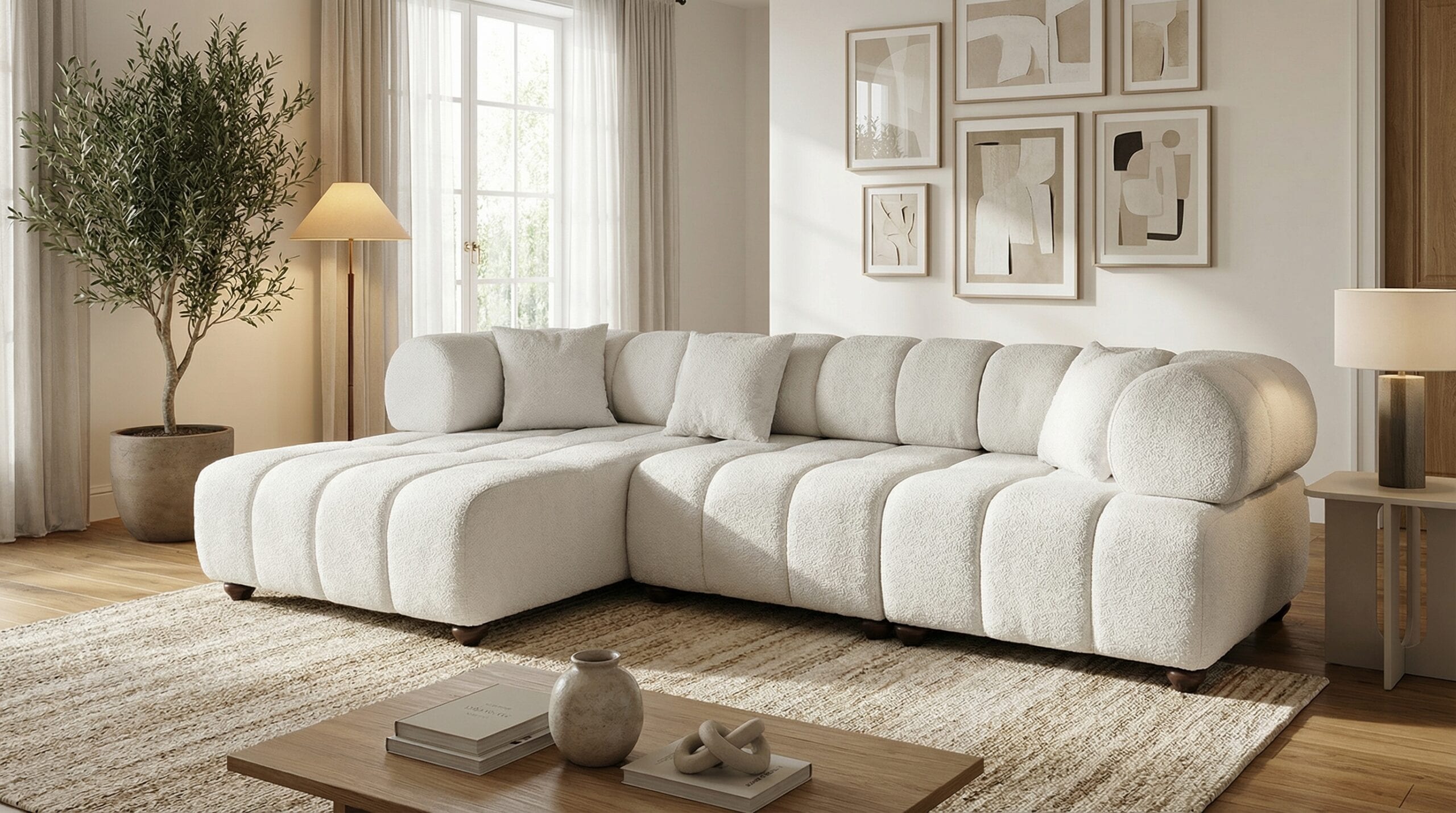
The "right" firmness or softness you feel the first time you sit on a sofa is not random at all; it largely depends on the density of the foam inside it. While fabric color, armrest style, or leg details are matters of visual preference, foam density is a technical factor that determines whether a sofa will still be comfortable to sit on years later. In this article, we explain step by step what density means, how it is measured, and how it should influence your purchasing decision.
What Is Foam Density and How Is It Measured?
Foam density refers to how many kilograms one cubic meter of foam weighs and is usually expressed in "kg/m³." For example, a foam with a density of 25 kg/m³ contains less material than a 35 kg/m³ foam of the same volume, and it will sag faster over time.
It's worth clarifying a common point of confusion here: density and firmness are not the same thing. Firmness refers to the foam's resistance to pressure (the ILD, or Indentation Load Deflection value), while density indicates how tightly packed and durable the foam's cell structure is. In other words, it is technically possible to produce a low-density foam that feels firm, but such foam loses its resilience quickly. For long-lasting comfort, density is the value that truly matters, while the sense of firmness comes down to personal preference.
The Relationship Between Density and Comfort
Low-density foams can feel soft and comfortable the moment you first sit on them, which often leads to a quick purchase decision in the store. Over time, however, this type of foam tends to develop two main problems:
- Sagging: Permanent indentations form in the seating area, and the sofa loses its original support.
- Loss of shape: The foam cells break down over time, lose their elasticity, and the sofa starts to take on a sunken, "bowl-like" appearance.
With high-density foams, the initial seating feel may be slightly firmer, but behind that firmness lies a long-term advantage: the foam distributes weight more evenly and maintains body support for years. This is why high density is a critical factor for sustained comfort in seating groups used heavily on a daily basis.
Choosing Density Based on Usage Area
Not every part of a sofa requires the same foam density. Since the seat, backrest, and armrests bear different pressure loads, manufacturers typically use layered foam systems. The generally accepted approach can be summarized as follows:
- 25-30 kg/m³: Sufficient for back cushions and decorative pillows, since they don't bear direct weight, low density isn't an issue here.
- 30-35 kg/m³: Medium density, preferred for occasionally used furniture such as guest room sofas.
- 35-40 kg/m³ and above: Ideal for heavily used seating surfaces; this range ensures long-lasting performance for sofas used for hours in front of the TV.
When choosing a sofa set, it's worth asking not just about the overall density figure, but also whether the seat and backrest are made with different density levels. In quality manufacturing, this distinction is made deliberately.
The Effect of Foam Density on Durability and Frame Structure
Foam density should not be evaluated in isolation; it forms a whole together with the sofa's frame structure. A high-density foam truly shows its performance when placed on a solid wooden frame. Even quality foam placed on a weak frame will eventually be exposed to uneven pressure and wear out prematurely. This is why using hard, flexible wood types like beech in production is a complementary factor that supports the foam's performance.
When evaluating a sofa's comfort, looking not only at the initial seating feel but also at the foam's density value together with the frame material is the most important step in determining long-term satisfaction.
What to Look for When Buying?
To accurately assess foam density while shopping in-store or online, you can apply these practical methods:
- Look for density information in kg/m³ in the product description; if it's not provided, ask the seller for it.
- If possible, sit on the sofa for at least a minute; the feeling after a few minutes is far more telling than the first-second impression.
- Press down on the seat with your hand and release it, then observe how quickly the foam returns to its original shape; slow recovery can indicate lower-quality material.
- If your household includes children, elderly individuals, or someone who sits for long periods, prioritize high-density, supportive models.
In conclusion, foam density is an invisible yet critical detail that determines not just how a sofa feels on day one, but how it performs years down the line. The right combination of density and a solid frame directly affects both seating comfort and the furniture's lifespan. When exploring sofa set models with different density and support options, paying attention to these technical details will help you make a more informed choice in the long run.
Let's find the right model together
Let Belvora AI recommend the best model for your room size and lifestyle.
Get a free quote