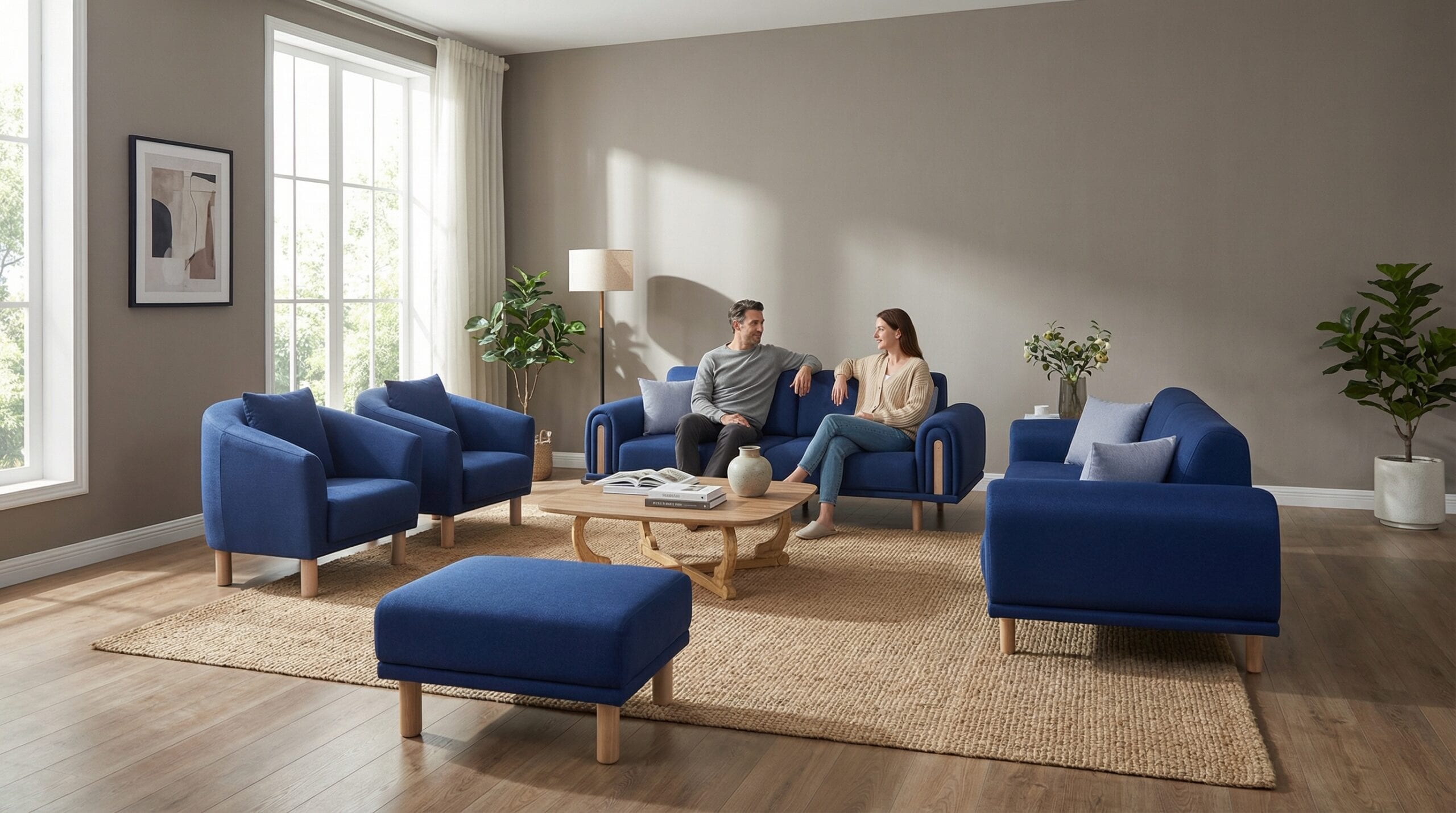
One of the phrases furniture sellers use most often is "stain-resistant fabric." However, since this term isn't based on a standardized measurement, a product one brand calls "stain-resistant" may not perform the same way as another's. This detail directly affects a piece of furniture's 5-10 year lifespan, especially for households with children, pet owners, or families who frequently host guests. In this article, we walk you through 5 concrete tests you can apply in the store or on a fabric sample before making a purchase.
Why Should You Test the Fabric?
No matter how sturdy a sofa or couch's frame is, if the fabric gets dirty or fades quickly, the furniture's visual lifespan shortens. The most reliable way to assess fabric quality is to trust your own observation and touch rather than the seller's verbal claims. Most of the tests below can be applied on a sample in the store within 1-2 minutes; you can also request a fabric swatch to try at home.
Test 1: The Water Droplet Test
This is one of the simplest yet most informative tests. Drop a small amount of water onto the fabric sample and wait 30-60 seconds.
- If the droplet beads up on the surface without spreading: The fabric has a water-repellent (hydrophobic) coating, which usually indicates high stain resistance as well.
- If the droplet immediately soaks in and spreads: The fabric has an absorbent structure and will be more vulnerable to liquid-based stains (coffee, fruit juice, tea).
- If the droplet absorbs slowly but leaves no mark: This indicates moderate resistance, which may be acceptable for everyday use.
If you can't run this test in the store, you can request a fabric sample from the seller and try it at home. Reputable manufacturers typically don't refuse this request.
Test 2: The Touch and Rub Test
The fabric's surface texture directly affects its tendency to stain. Gently rub the fabric with your fingers and pay attention to the following:
- If the surface is smooth and tightly woven: Dust and dirt particles have a harder time clinging to the surface, which delays staining.
- If the surface is fuzzy or loosely woven: Dirt and liquids penetrate the fibers more easily, making cleaning more difficult.
- If fibers shed when you rub: The fabric's durability may be low, and wear will accelerate over time.
Tightly woven, smooth-surfaced fabrics generally have an advantage both in stain resistance and everyday wear.
Test 3: The Colorfastness (Dry and Wet Rub) Test
This test is especially important for dark-colored or patterned fabrics. Rub a white cloth over the fabric a few times, first dry, then slightly dampened.
- If no color transfers onto the white cloth, the dyeing process was done well and is stable.
- If no color transfers during dry rubbing but a slight mark appears during wet rubbing, the fabric may lose color during damp cleaning.
- If noticeable color transfer occurs in both cases, the fabric may be vulnerable to both staining and sunlight.
This is a step you shouldn't skip, especially when choosing a sofa or couch for a home with children.
Test 4: Oil-Based Stain Simulation
Alongside water-based stains, oil-based stains (olive oil, butter, cream) are among the biggest enemies of furniture fabrics. If you have the chance to test on a sample, drop a small amount of cooking oil on an inconspicuous corner of the fabric, wait 2-3 minutes, then gently wipe it with a dry cloth.
- If the oil mark wipes away easily, the fabric has high oil resistance.
- If a faint shadow remains after wiping, the fabric has moderate resistance and may require professional cleaning.
- If the oil fully penetrates the fabric and leaves a dark stain, this fabric carries risk for everyday use.
It may not always be possible to run this test in the store; in that case, it's worthwhile to ask the seller for technical information about the fabric's oil and stain resistance (such as fabric composition and any protective coating it may have).
Test 5: Reading the Fabric Composition
In some cases, a physical test may not be possible; this is where the composition information on the fabric label or product description comes in. Key points to keep in mind:
- Polyester-heavy blends generally have an advantage over cotton and linen blends in terms of water and stain resistance.
- Microfiber-textured fabrics slow down rapid liquid absorption thanks to their tight weave, giving you more time to clean up.
- Natural fibers (linen, cotton) offer a warm aesthetic look, but without a protective coating, they're more sensitive to stains and moisture.
After reading the composition information, if possible, ask the manufacturer whether the fabric is classified as "easy to clean" or "stain-resistant." Reputable manufacturers share this information clearly.
How Should You Use These Tests in Your Purchase Decision?
The result of a single test isn't enough to indicate a fabric's overall performance. A fabric that performs well in the water droplet test might perform poorly in the oil test. That's why, whenever possible, applying at least 2-3 tests together provides a more realistic assessment. You should also evaluate test results alongside your household's usage intensity: a moderate result might carry risk for a family with young children, while the same fabric could be perfectly adequate for a rarely used guest room.
As much as fabric choice matters, the furniture's frame structure is another factor affecting long-term durability. No matter how resistant the fabric is, a sofa built on a weak frame can lose its shape over time; that's why it's worth questioning the frame material alongside fabric testing.
Remember: "stain-resistant" should be a measurable feature, not just a marketing phrase. By running these tests, you can verify this claim with your own eyes.
Ultimately, focusing on a fabric's real performance—not just its color and design—is the most practical way to avoid regret years down the line when buying furniture. By applying the 5 tests above, you can protect both your budget and your home's long-term comfort.
Let's find the right model together
Let Belvora AI recommend the best model for your room size and lifestyle.
Get a free quote