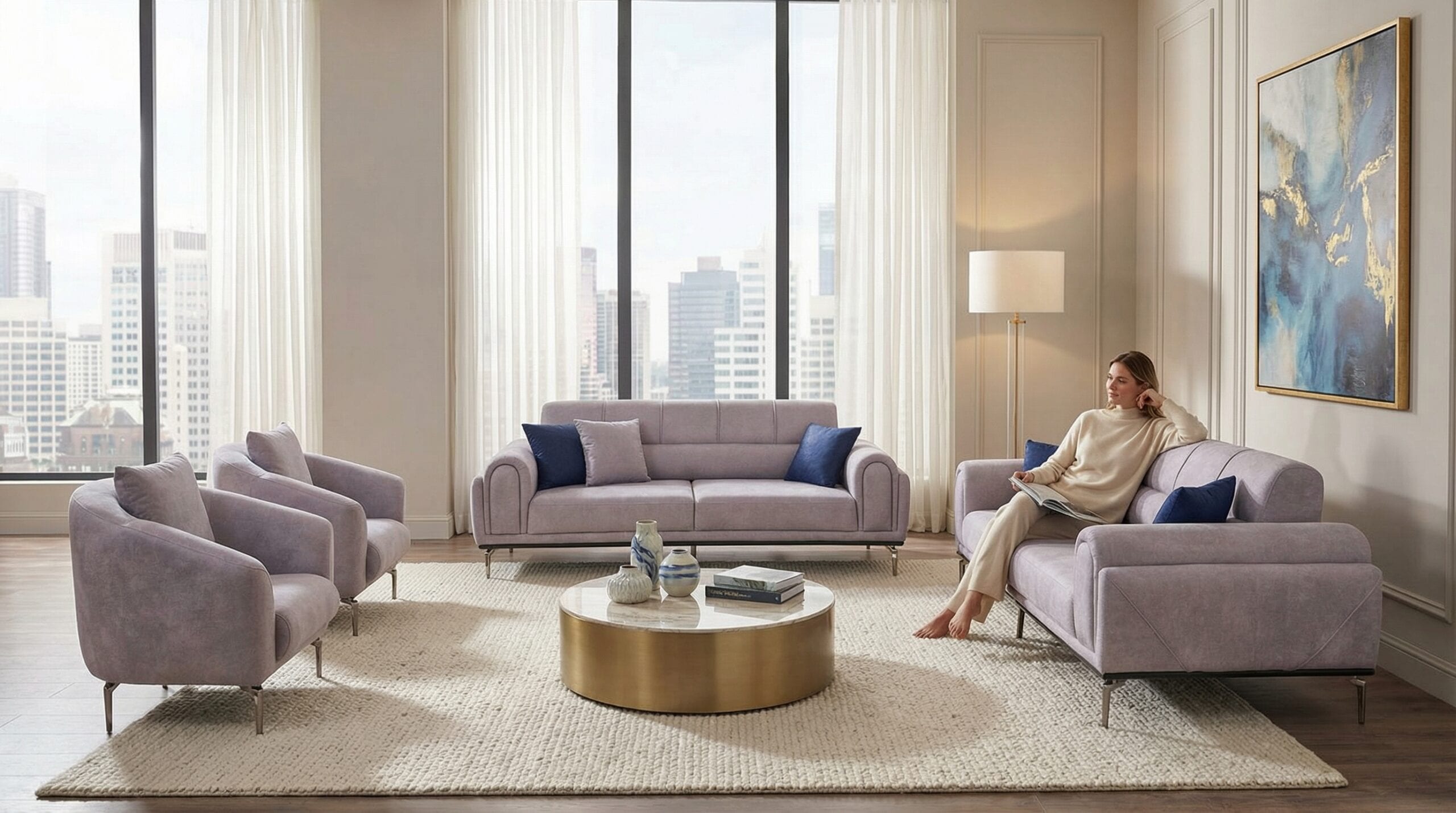
Changing the mood of a living room doesn't always require new furniture. Refreshing textile elements like slipcovers, poufs, cushions and throws on fabric-upholstered sofas according to the season is the most practical way to make the same room feel warm and inviting in winter, and fresh and light in summer. This approach is both budget-friendly and extends the lifespan of your furniture, since the main upholstery isn't subjected to constant wear at the same intensity.
What's the Logic Behind Seasonal Textile Swaps?
Textile swaps change the color temperature and textural feel of a room, influencing how the brain perceives the space. Warm tones (brown, mustard, burgundy, terracotta) and thick textures (velvet, boucle, wool-blend fabrics) create a sense of warmth in winter, while light tones (cream, light gray, powder pink, mint) and thin textures (linen, cotton blends) strengthen the perception of airiness in summer. This shift is not just visual but also tactile; a velvet cushion feels warm to the touch, while a linen throw feels cool.
Professional interior designers call this principle "layered textiles." In other words, layers that can be removed and added according to the season are placed over the main furniture, which remains constant. These layers consist of complementary elements such as sofa covers, decorative pillows, throws and rugs.
Textile Choices for Winter: Warmth and Coziness
In winter months, the purpose of the living area is to feel like a refuge from the cold outside. Here are the key points to consider:
- Thick and textured fabrics: Velvet, chenille or wool-blend cushion covers add both visual and tactile warmth.
- Dark and warm color palette: Burgundy, mustard yellow, dark green and brown tones are the most preferred colors in winter.
- Layered throws: A knitted or wool throw left over the corner of the sofa provides both a functional and aesthetic touch.
- More cushions: In winter, sofas typically feature a greater number of larger cushions, which enhances the sense of comfort.
When applying these changes, harmony with the sofa's own upholstery color is important. For example, sofa set models with neutral-toned upholstery can easily be enriched with dark-colored cushions and throws during winter; having a main upholstery color that isn't too bright or cool makes these winter arrangements much easier.
Textile Choices for Summer: Airiness and Lightness
In summer months, the goal is to make the space feel brighter and more breathable. The elements preferred during this period follow the opposite logic of winter:
- Thin and natural fabrics: Linen, cotton blends and lightly textured fabrics are preferred in summer. These fabrics look lighter and feel cooler in hot weather.
- Light and vivid colors: Tones like cream, white, light blue and mint green strengthen the perception of freshness during summer months. Those who want extra energy can add one or two accent cushions in vivid colors like coral or turquoise.
- Fewer cushions, a simpler arrangement: Reducing the number of cushions in summer makes the sofa look more spacious. Thin throws can be preferred instead of thick ones.
- Natural patterns: Botanical or light geometric patterns support the summer theme.
Practical Steps for Application
Following these steps makes seasonal textile swaps easier:
- Prepare two sets of cushion covers: Using the same inner cushion and only swapping the outer covers saves both space and cost.
- Store throws and covers according to the season: Keeping winter throws in vacuum storage bags in a closet during summer months both saves space and preserves the fabric's shape.
- Make color transitions gradual: During seasonal transitions (for example, from spring to summer), instead of changing all the textiles at once, you can create a smoother transition by first swapping the cushions, then the covers.
- Don't neglect fabric care: Especially with easy-to-clean fabrics, wiping the surface with a damp cloth during seasonal changes helps keep the fabric clean before storage.
The Importance of Choosing the Main Upholstery
How effective a seasonal textile swap will be actually depends directly on the color and texture of the sofa's main upholstery. A neutral, mid-tone upholstery (such as gray, beige or stone color) harmonizes with both dark winter tones and light summer tones. For this reason, when choosing a new sofa, it's worth considering not just the current decoration trend, but also how open the piece is to different textile combinations throughout all four seasons.
Additionally, easy-to-clean fabrics provide great convenience when it comes to dust, lint or stains that may occur during seasonal cushion and cover changes. Having a main upholstery that is easy to clean makes a significant difference in both hygiene and appearance over the long term, especially on a sofa where cushions are changed frequently.
So, What Should You Do?
If you want to refresh the atmosphere without replacing your sofa, creating a seasonal textile routine is the smartest solution. By adopting a thick, dark and textured approach in winter, and a thin, light and simple approach in summer, you can create different moods with the same furniture throughout the year. This method is both an economical and sustainable approach to decoration, since instead of major investments, you keep your space feeling fresh with small, recurring textile updates.
Let's find the right model together
Let Belvora AI recommend the best model for your room size and lifestyle.
Get a free quote