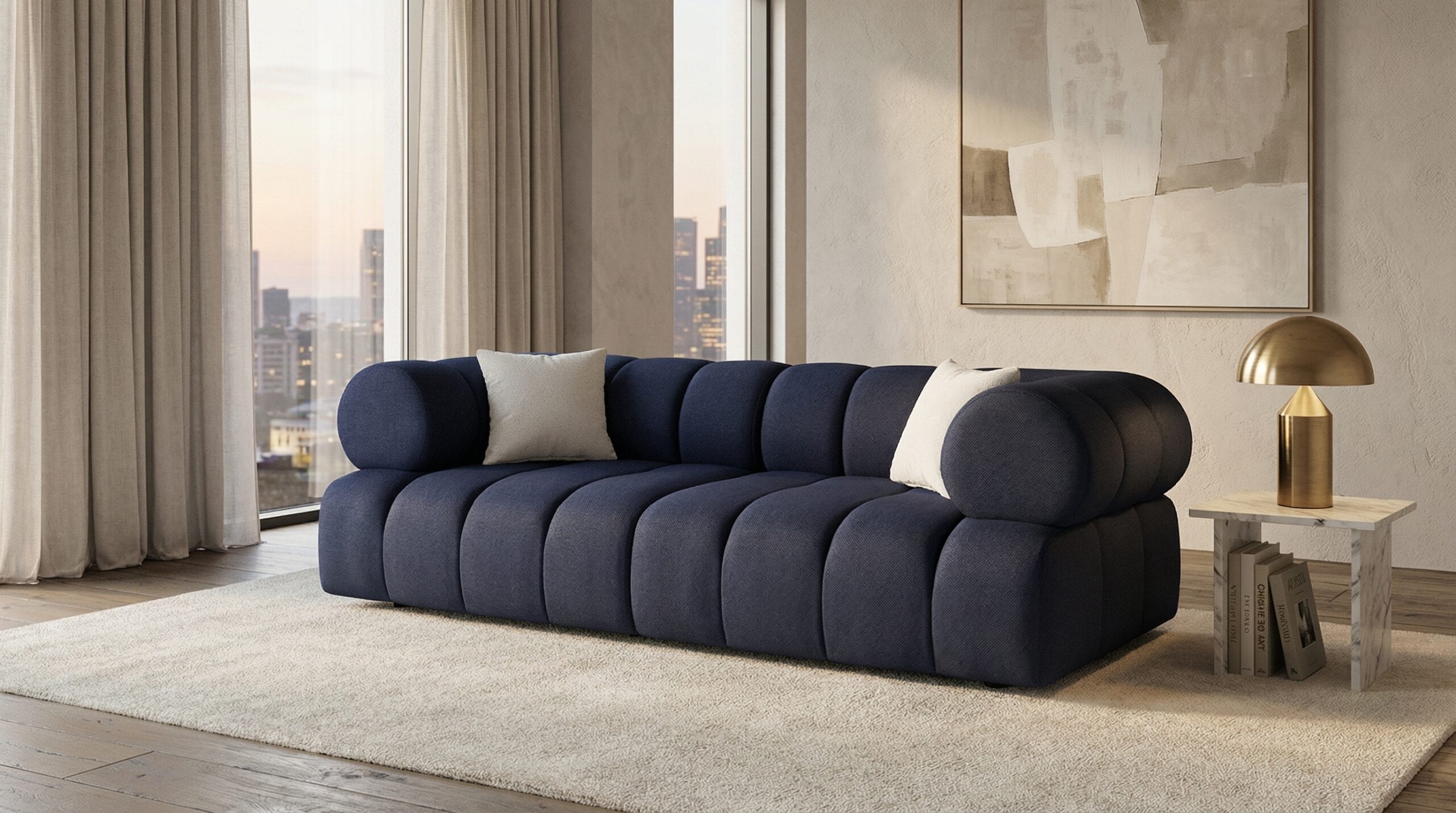
There's a factor that matters as much as—sometimes even more than—how a sofa or couch looks: seat depth and back support. In households where people sit for long hours working, watching TV, or hosting guests, a sofa with incorrect dimensions can lead to lower back pain, back tension, and posture problems over time. In this article, we examine the criteria for ergonomic sitting through concrete measurements and practical tests.
Why Does Seat Depth Matter So Much?
Seat depth is the distance from the front edge of the sofa to the backrest cushion. When this measurement is off, two different problems arise:
- Too deep a seat: Your back can't fully rest against the backrest cushion, so you either end up sitting slightly forward or your knees are left hanging in the air. In both cases, the lower back receives no support, and loss of lumbar curve can occur over time.
- Too shallow a seat: Your legs extend beyond the sofa, the underside of your thighs isn't properly supported, and pressure builds up behind the knees. This can negatively affect blood circulation.
The ideal seat depth should leave about 5-8 cm of space between the back of the knee and the cushion edge when the person's back is fully resting against the backrest. This gap allows for leg movement while maintaining continuous back contact.
A Practical Way to Test Seat Depth
When evaluating a sofa in a store or at home, you can follow these steps:
- Sit on the sofa and rest your back fully against the backrest.
- Your feet should be flat on the floor, with your knees at roughly a 90-degree angle.
- Check the distance between the back of your knee and the cushion edge with your hand; a gap about the width of your palm is ideal.
- Sit in that position for about 5 minutes and observe whether you feel any pressure in your lower back or back area.
Back Support: It Should Follow the Curve of Your Lower Back
The human spine isn't a straight line; there's a slight inward curve (lordosis) in the lower back area. Good back support should reinforce this curve—rather than acting like a flat board, it should follow the body's natural shape.
Points to consider when evaluating back support:
- Lower back support: The lower part of the backrest should provide gentle padding that fills the curve of the lower back. If there's a gap, the lower back muscles remain constantly strained.
- Back height: If the backrest extends up to shoulder level, it offers a more comfortable experience during long sitting sessions; shorter backrests can leave the upper back and neck area unsupported.
- Cushion firmness: Cushions that are too soft pull the body inward and disrupt proper posture, while cushions that are too firm create pressure points. Medium-firmness, high-resilience foam fillings generally provide the most balanced result.
Seat Height and Armrest Points
Just as important as seat depth and back support is seat height. For a standard adult, the ideal seat height ranges between 40-45 cm. At this height, the feet rest flat on the floor and the hip-knee angle stays roughly between 90-100 degrees. With sofas that are too low, standing up becomes difficult and more load is placed on the knee joints; with sofas that are too high, the feet lift off the ground and pressure builds up under the thighs.
Armrest points are equally important. The height of the armrest shouldn't force the seated person to raise their shoulders while comfortably working at a table or reading a book. The ideal armrest height typically ranges between 20-25 cm from the seating surface.
Ergonomic Differences Based on Usage Purpose
Not every type of sofa has the same ergonomic requirements. Expectations vary depending on the intended use:
- Work/reading chairs: A more upright back angle (100-110 degrees) and medium-firm cushioning should be preferred, since support is the priority during long periods of upright sitting.
- Relaxation/TV-watching sofas: A wider seat depth and slightly softer padding provide comfort in reclined positions.
- Guest-hosting sofas: Since the priority here is both aesthetics and comfort during shorter sitting periods, moderate depth and a balance between firmness and softness are preferred.
The Effect of Fabric and Filling Material on Ergonomics
Ergonomics isn't just about measurements; the filling material used also directly affects the sitting experience. When foam density is low, the material loses its shape quickly and its supportive quality diminishes. High-density foam or hybrid foam-spring systems preserve their shape over the long term, sustaining back support over time.
The frame material should also not be overlooked. In sofas with wooden frames, hardwoods that are both sturdy and flexible—such as beech—help prevent sagging or creaking in the seating surface over time. This indirectly ensures that ergonomic performance is maintained in the long run.
Ergonomic Checklist
Items you should check when buying a new sofa or couch:
- Does your back fully touch the backrest when you sit down?
- Is there a comfortable gap between the back of the knee and the cushion edge?
- Do you feel supported in your lower back, or is there a gap?
- Do your feet rest flat on the floor?
- Does the armrest height avoid straining your shoulders?
- Does the filling material lose its shape quickly after sitting, or does it retain its form?
Conclusion: Ergonomics Is a Long-Term Investment
Proper seat depth and back support not only enhance everyday comfort but also protect your musculoskeletal health in the long run. When choosing a sofa, considering the dimensional criteria mentioned above—not just color and fabric pattern—ensures a healthier sitting experience both in the short and long term. When browsing sofa sets that pay attention to ergonomic details, it's a good habit to check whether the seat depth and back support measurements are specified in the product descriptions.
Let's find the right model together
Let Belvora AI recommend the best model for your room size and lifestyle.
Get a free quote