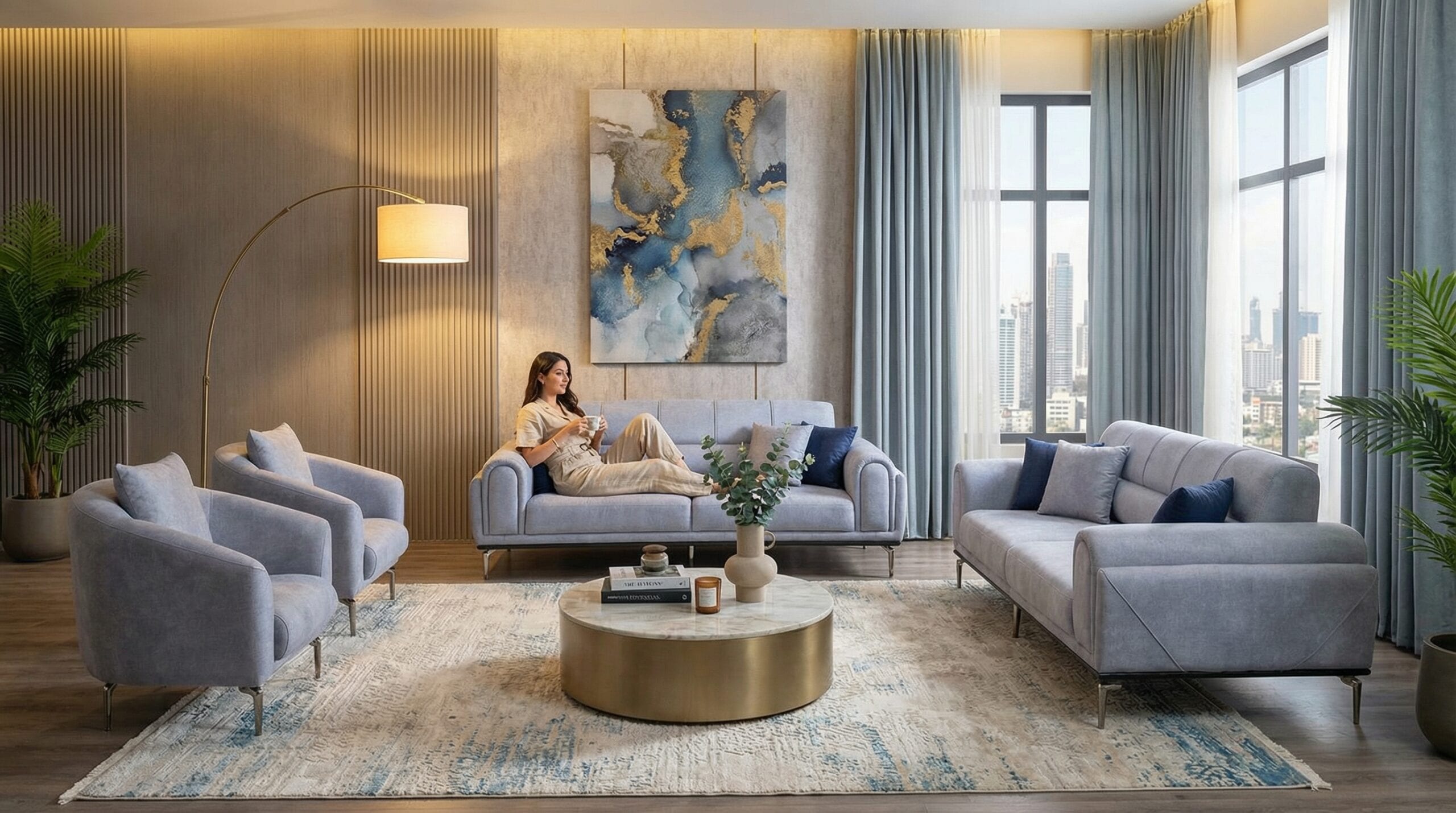
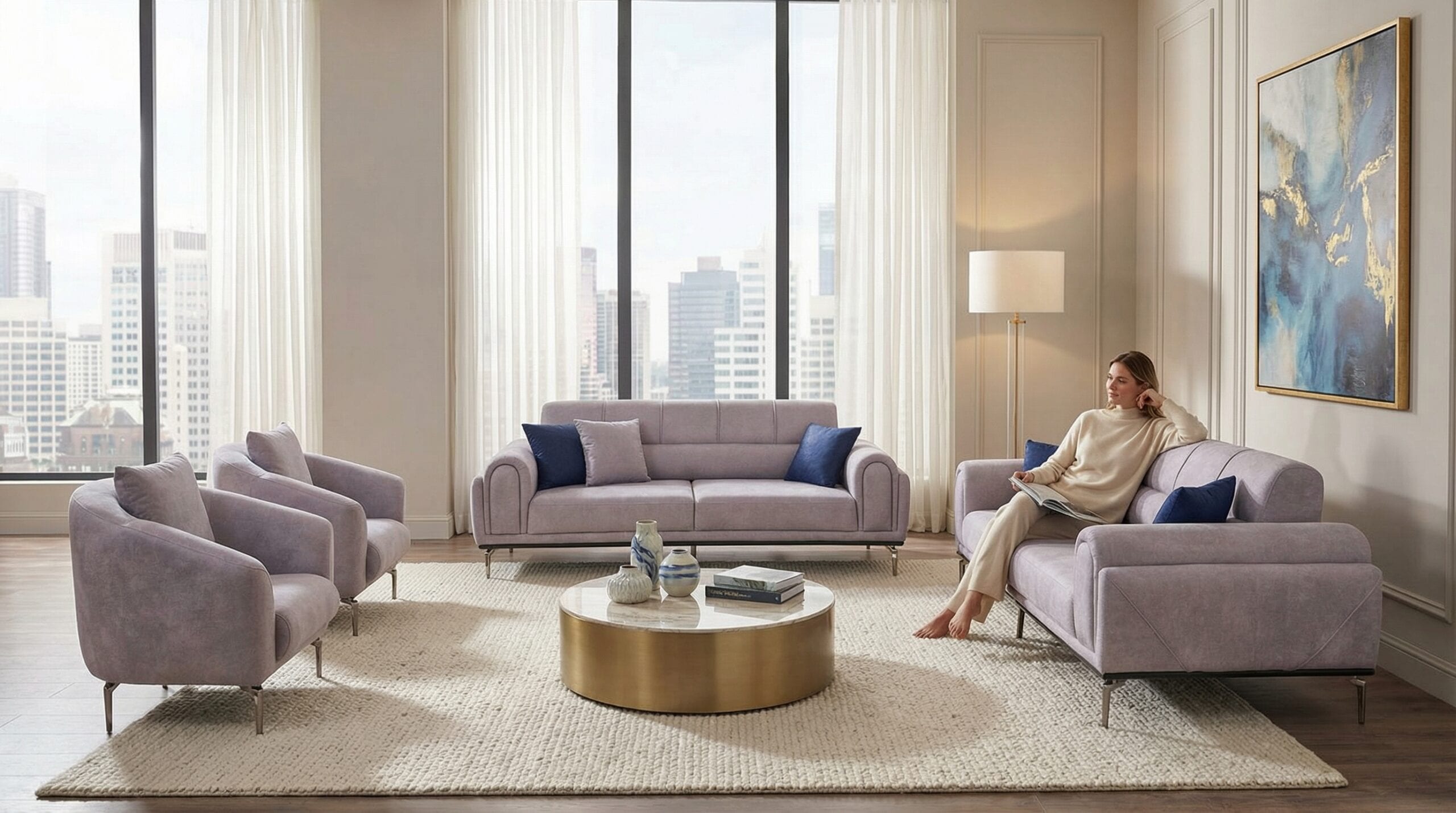
When purchasing a sofa set or couch, the first things that usually catch the eye are color and design. Yet the real factor determining a piece of furniture's long-term comfort and durability is the type of fabric covering it. Boucle, velvet, synthetic, and linen fabrics each offer very different textures, maintenance requirements, and lifespans. In this guide, we take a close look at each fabric type to help you make the best choice for your home.
Boucle Fabric: A Natural Look and Cozy Texture
Boucle fabric stands out both visually and texturally with its looped-yarn weave. Frequently favored in Scandinavian and minimalist designs in recent years, boucle creates a warm and inviting atmosphere.
- Advantages: Thanks to its soft texture, seating comfort is excellent, shedding is minimal, and its color palette generally consists of natural, calming tones.
- Disadvantages: Due to its looped structure, it's sensitive to sharp objects (such as cat claws or keys). If liquids aren't wiped up quickly, there's a higher risk of stains setting in.
- Best suited for: Households without pets that appreciate calm color palettes and value textural detail.
Velvet Fabric: A Luxurious Look with Careful Maintenance
Velvet is a fabric type that instantly adds elegance to furniture with its glossy surface and soft texture. Especially in darker tones, it creates a striking focal point in a room.
The Strengths of Velvet
Velvet's greatest advantage is its aesthetic value. The way it reflects light creates a natural play of shadow and shine on the fabric, adding depth to the furniture. Additionally, high-quality velvet fabrics are typically densely woven, which can make them quite long-lasting.
Points to Watch Out For
Over time, the nap of velvet fabric can flatten, creating visible shine differences in frequently used areas. It also tends to attract moisture and dust more than other fabrics, requiring regular brushing and professional cleaning. It should be used with care in homes with children and pets.
Synthetic Fabrics: Practicality Meets Durability
Synthetic options such as microfiber, polyester, and blended fabrics are among the most popular choices today. This is largely because they offer both easy maintenance and high durability.
- Stain resistance: Most synthetic fabrics naturally resist water-based stains, making everyday use much more convenient.
- Color retention: They tend to fade less than natural fabrics when exposed to sunlight.
- Lifespan: Thanks to high abrasion resistance, they're preferred for heavily used seating groups.
- Texture feel: High-quality synthetic fabrics can offer a softness very close to natural fabrics, though lower-quality versions may stiffen over time.
The easy-to-clean fabric structure preferred in Belvora Mobilya's production is a good example of this category. Especially in homes with children or spaces with frequent guest traffic, these types of fabrics offer a practical solution that simplifies daily cleaning.
Linen Fabric: Natural Texture, Light Maintenance Needs
Thanks to its natural fiber structure, linen offers a breathable and cool texture. It's especially common in warm climates and in homes that favor natural or organic design.
Linen's Standout Features
Linen's biggest advantage is its natural quality; linen that hasn't undergone chemical treatment can be a more suitable option for users with allergy sensitivities. The slight wrinkles that develop over time also give the fabric an organic, lived-in charm.
Linen's Limitations
Compared to boucle and synthetic fabrics, linen wrinkles and wears more easily. In heavily used areas (such as main seating used daily), it may require more frequent maintenance. Its tendency to hold stains is also relatively high, so using a protective spray is recommended.
Which Fabric Type Suits Which Lifestyle?
Choosing the right fabric depends on how intensively your home is used, your household composition, and your design preferences. It's helpful to ask yourself the following questions when deciding:
- Are there children or pets in the home? If so, synthetic and easy-to-clean fabrics should be your top priority.
- Will the furniture be used daily, or is it for a guest room? For heavy daily use, highly durable synthetic or boucle fabrics work well; for guest rooms, more aesthetically focused fabrics like velvet can be preferred.
- How much time can you devote to maintenance? If you can maintain fabric regularly, velvet and linen are good options; if you want a practical solution, synthetic fabrics are more suitable.
- What's the climate like in the space? In hot and humid environments, linen's breathability offers a real advantage.
Focusing not just on your visual preferences but also on your home's daily dynamics when choosing fabric will boost your satisfaction in the long run. For example, a stylish velvet sofa could be a wonderful choice for a young couple, while synthetic, easy-care models would offer a far more practical solution for a busy, bustling family.
Conclusion: Fabric Choice Is a Lifestyle Decision
Boucle, velvet, synthetic, and linen fabrics each bring their own unique aesthetic value and maintenance requirements. The right choice should be shaped by how intensively your home is used, your maintenance habits, and your design preferences. When selecting a fabric type, prioritizing long-term usage experience over short-term visual appeal is the wisest approach—both for protecting your budget and for maintaining your home's comfort.
Let's find the right model together
Let Belvora AI recommend the best model for your room size and lifestyle.
Get a free quote